I help organizations make complex things feel simple.
Guided by observation, thoughtful leadership, and a focus on how people actually experience their world.
Across Industries
I've been fortunate to work in industries including healthcare, finance, hospitality, manufacturing, retail, and government.
On paper, they don't have much in common.
The common thread wasn't the industry.
It was understanding the people each organization served, how the organization worked, the constraints both of them faced, and where design could make the greatest difference.
The industries changed.
Human behavior didn't.
I've always started by looking beyond the experience to the systems that shape it—and knowing where design can make the greatest difference.
Selected work.
The ideas above weren't developed in isolation. They were shaped by solving complex problems across healthcare, finance, hospitality, retail, and other industries—where understanding systems mattered more than understanding any one industry.
Here's what that looks like in practice.
01
Atlantic Health System
Helping people navigate one of the nation's largest healthcare systems.
The challenge:
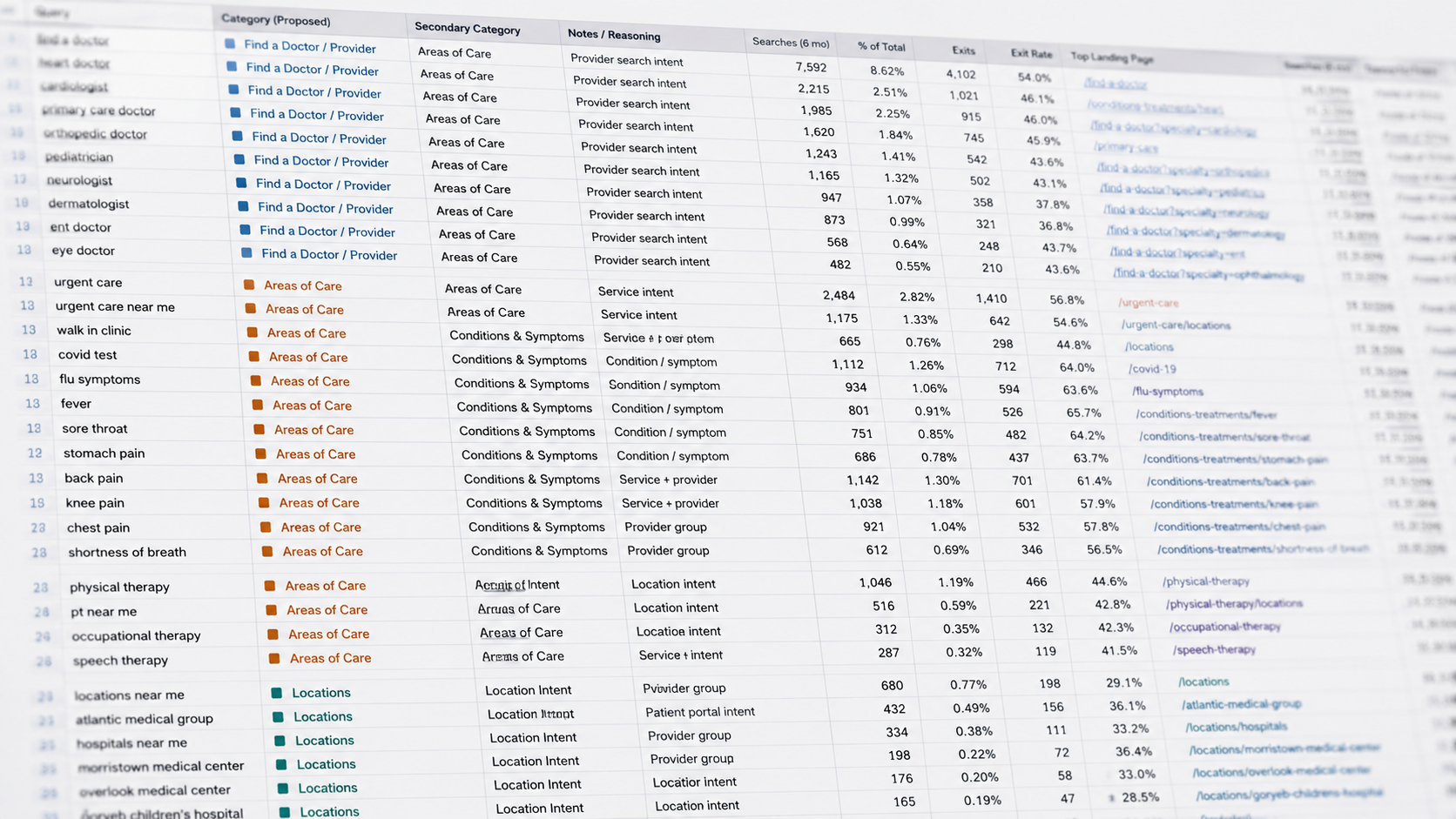
Patients weren't struggling to use the website. They were struggling to understand a healthcare system that had grown faster than its information architecture.
The insight:
Finding care isn't primarily an information problem. It's an information architecture problem.
The approach:
Rather than redesign search results, I helped redefine how healthcare information was organized, categorized, and surfaced—creating a guided search experience that matched how people actually think when they're trying to find care.
The outcome:
The result wasn't simply a better search experience. It established a scalable information architecture capable of supporting future growth, AI-assisted search, and more intuitive patient journeys.
02
Cherokee Casinos
Creating one experience across multiple destinations.
The challenge:
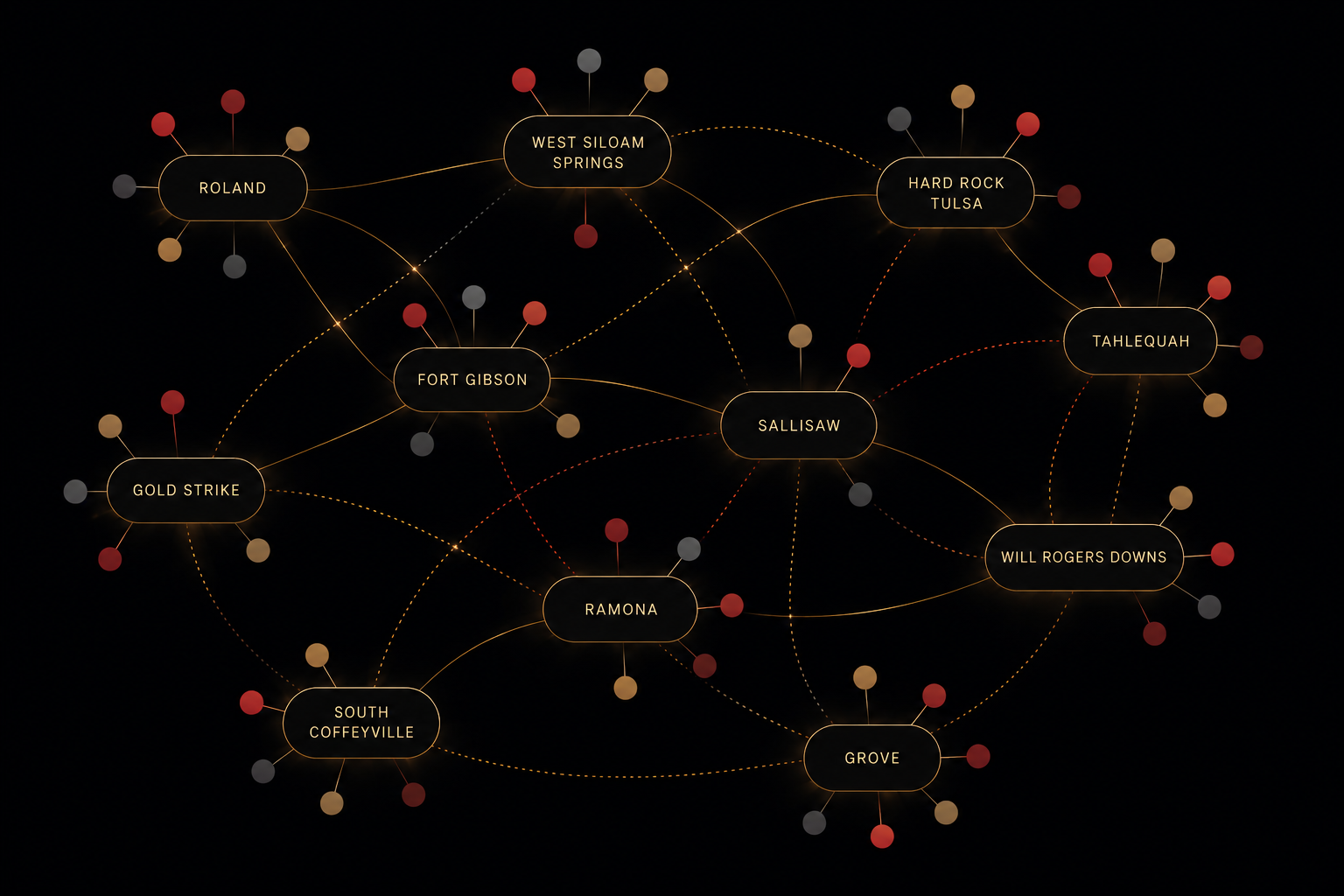
Each property had evolved independently. Guests had to relearn the experience every time they visited a different casino.
The insight:
The challenge wasn't helping guests navigate individual properties. It was creating one system that could flex across many.
The approach:
I developed an information architecture that balanced local identity with organizational consistency—allowing each destination to feel unique while remaining unmistakably part of Cherokee Casinos.
The outcome:
The work created a more flexible foundation for expansion while making it easier for guests to discover, compare, and move between properties.
03
MetLife
The challenge:
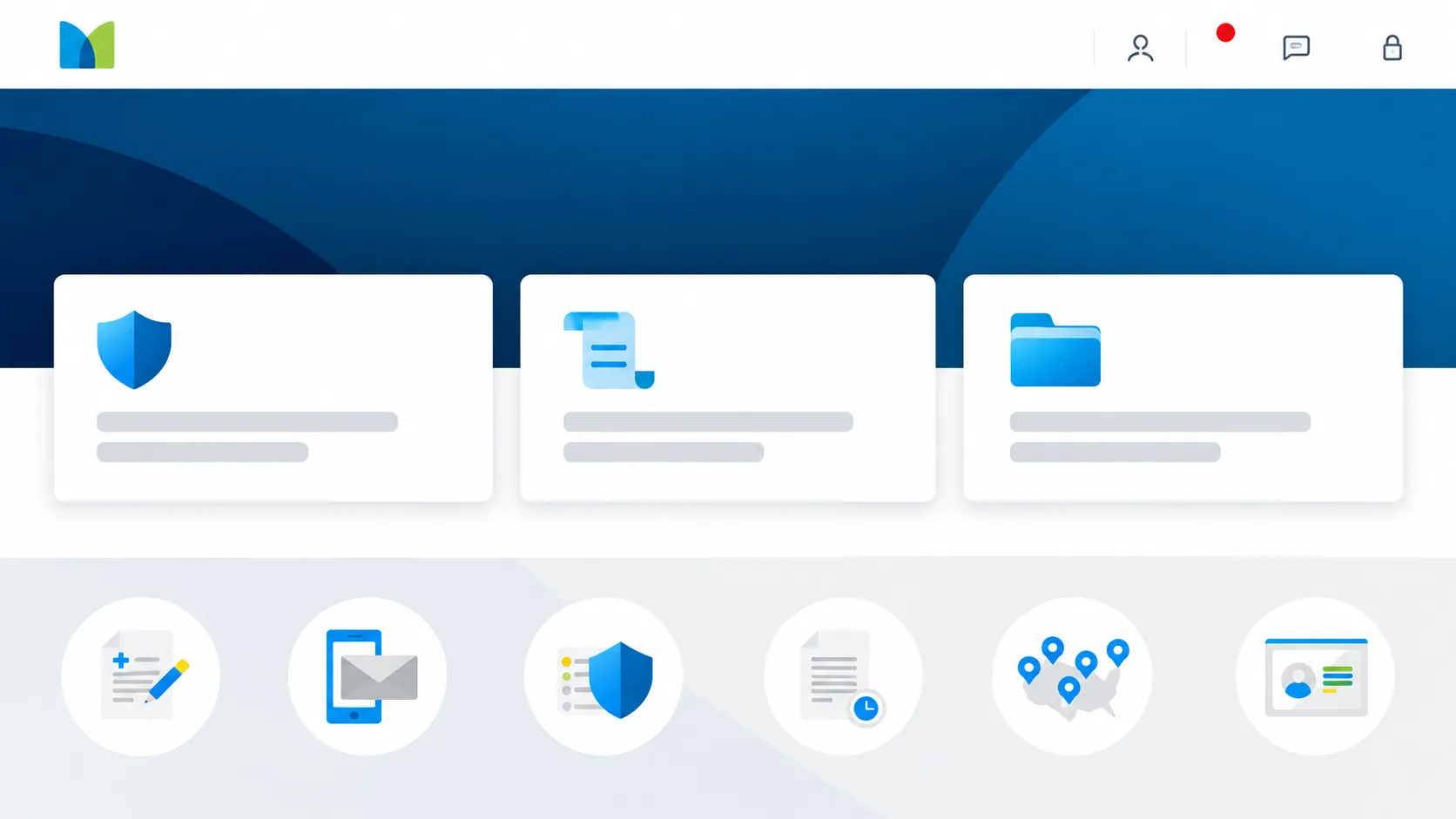
As MetLife expanded through acquisitions and legacy systems, members experienced inconsistent navigation, disconnected products, slow performance, and fragmented experiences.
The insight:
The visible interface wasn't the problem.
The underlying ecosystem was.
The approach:
Rather than solving isolated UX issues, I focused on the systems creating them. I designed patterns that allowed marketing and servicing platforms to work together, created navigation that unified acquired products, and introduced content strategies that improved both performance and findability.
The outcome:
The work wasn't about redesigning pages.It created design patterns that could evolve alongside the business—reducing friction for members while supporting future acquisitions, technical constraints, and organizational change..
04
H&R Block
Transforming how one of the world's largest tax platforms was designed and built.
The challenge:
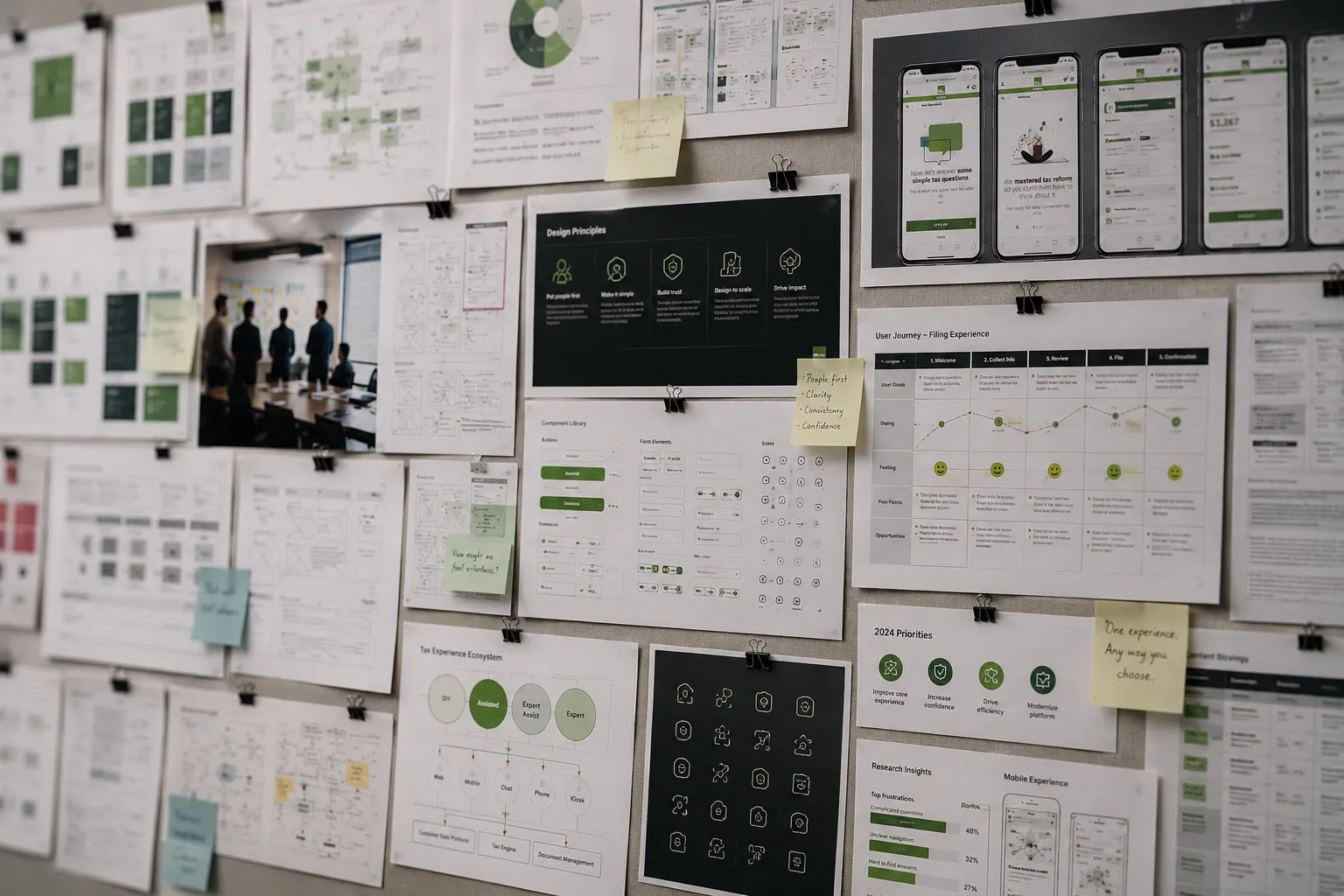
The product reflected organizational silos more than customer needs. Teams worked independently, research was rarely used, design systems didn't exist, and every release became harder to maintain.
The insight:
The interface reflected the organization behind it.Improving the experience meant improving the way the organization designed products.
The approach:
I rebuilt the design organization around research, collaboration, content strategy, shared standards, and scalable systems. We modernized tools, established evidence-based decision making, unified four design organizations, and began building a design system alongside engineering.
The outcome:
The transformation extended far beyond the product itself.It changed how teams collaborated, how decisions were made, and how design scaled across one of the world's largest consumer software platforms—creating a foundation that continued to improve customer experiences long after individual projects shipped.
The closing:
Design leadership isn't about producing better screens.
It's about understanding people, organizations, and the systems that connect them—then creating the conditions for better decisions, better products, and better experiences to emerge.
LET’S TALK
The problems I enjoy most are the ones that don’t have obvious answers.
If you’re working on something complex—and want to make it simpler for the people using it—I’d enjoy the conversation.
Send me a note at shane at olivus.design Or find me on LinkedIn
Shane Allen Wilson
Experience Design Leadership Kansas City, Missouri